

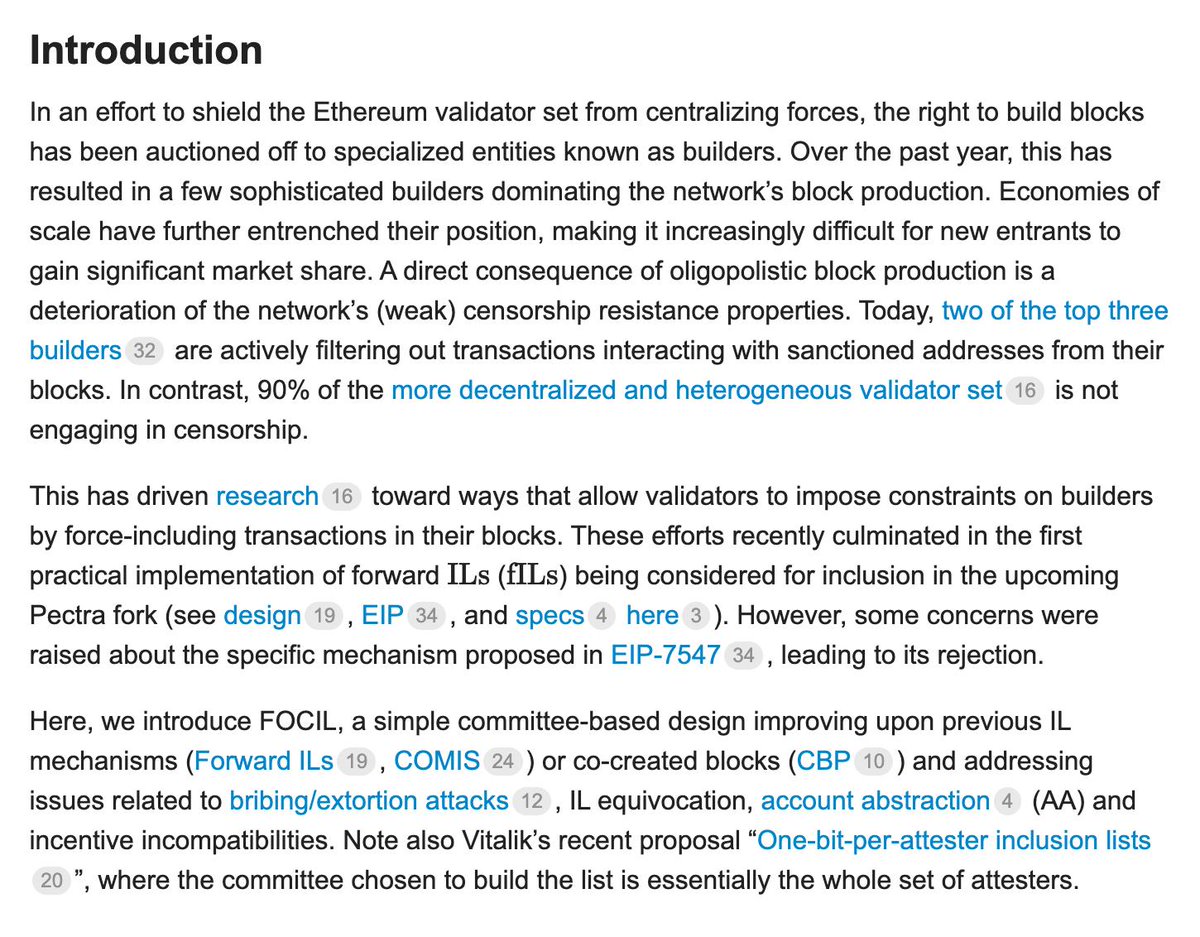
Ethereum developers have set the timeline for deploying FOCIL (Fork-Choice Enforced Inclusion Lists) — a core component of the planned Hegota upgrade scheduled for the second half of 2026. As part of the update, validators will be required under EIP-8141 to include valid transactions from public mempools. The goal is to significantly strengthen censorship resistance at the protocol level.
According to Ethereum co-founder Vitalik Buterin, FOCIL reaches its full potential when combined with EIP-8141. This proposal turns Smart Accounts into “first-class citizens” at the protocol level. Transactions from such accounts can be “directly included onchain as transactions,” Buterin notes.
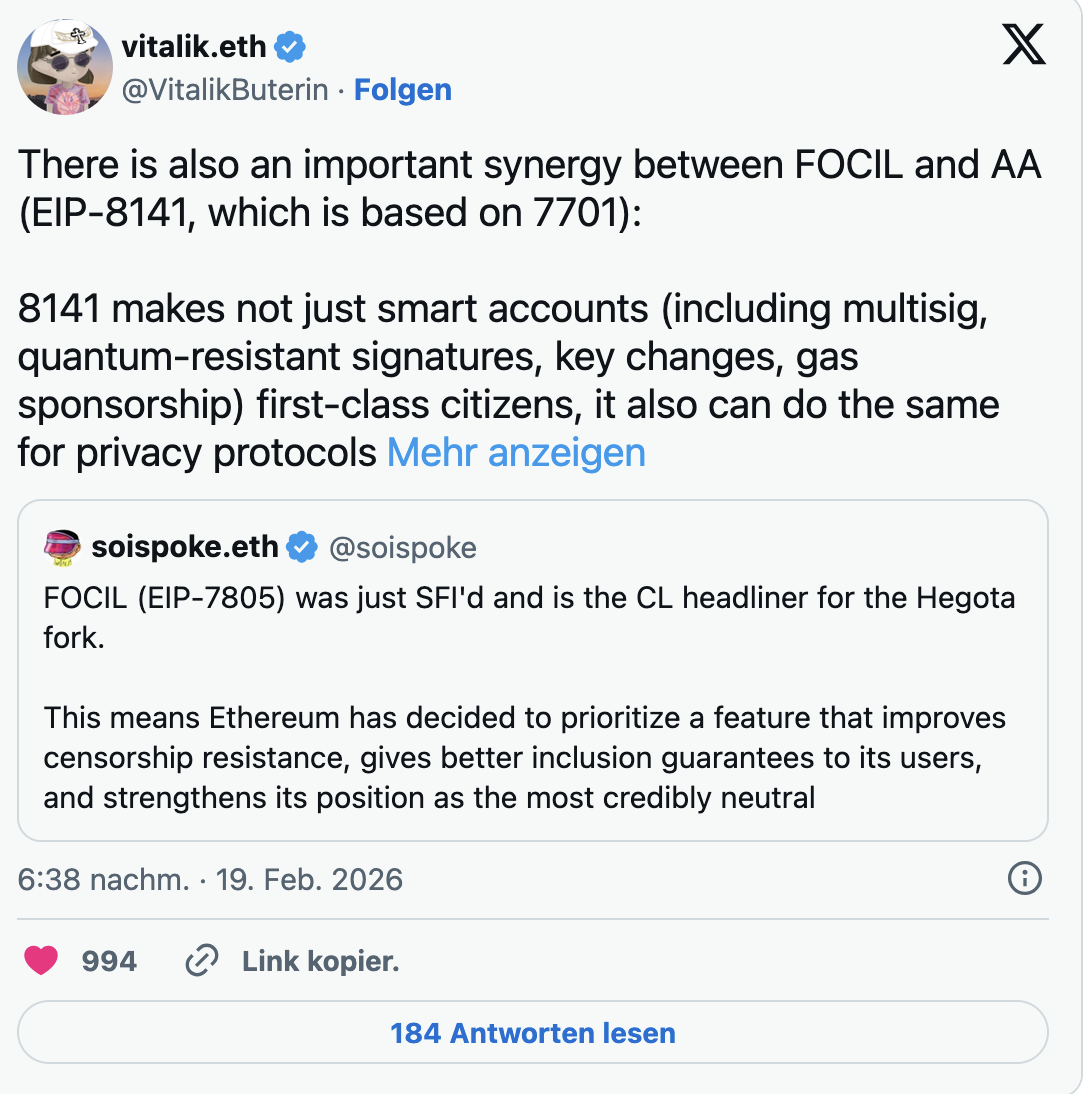
“FOCIL enables censorship-resistant and fast inclusion of any transaction,” he writes. In combination with EIP-8141, this would allow all types of transactions — including smart wallet operations, gas-sponsored transactions, and even privacy-protocol transactions — to be included onchain by one of 17 randomly selected actors per slot. This results in “guaranteed fast inclusion,” typically within one to two slots.
In practical terms, this means that if a validator deliberately excludes certain valid transactions from its block, the network can reject that block. The mechanism is intended to prevent systematic exclusion of transactions — for example, those linked to sanctioned addresses or protocols.
The initiative has sparked debate within the community. Ethereum developer Ameen Soleimani, among others, warned that such enforcement could expose validators to unforeseen risks, particularly when dealing with sanctioned entities. Other developers, however, emphasize that long-term censorship resistance is a core principle of Ethereum.
Buterin himself sums up the direction succinctly:
“Ethereum is moving decisively.”.